If you’ve got a system boiler (or you’re considering one), you may have heard the term thermal store. It’s often confused with a hot water cylinder, but it works a little differently.
This guide explains what a thermal store is, how it works, and best-practice tips to keep it running efficiently.
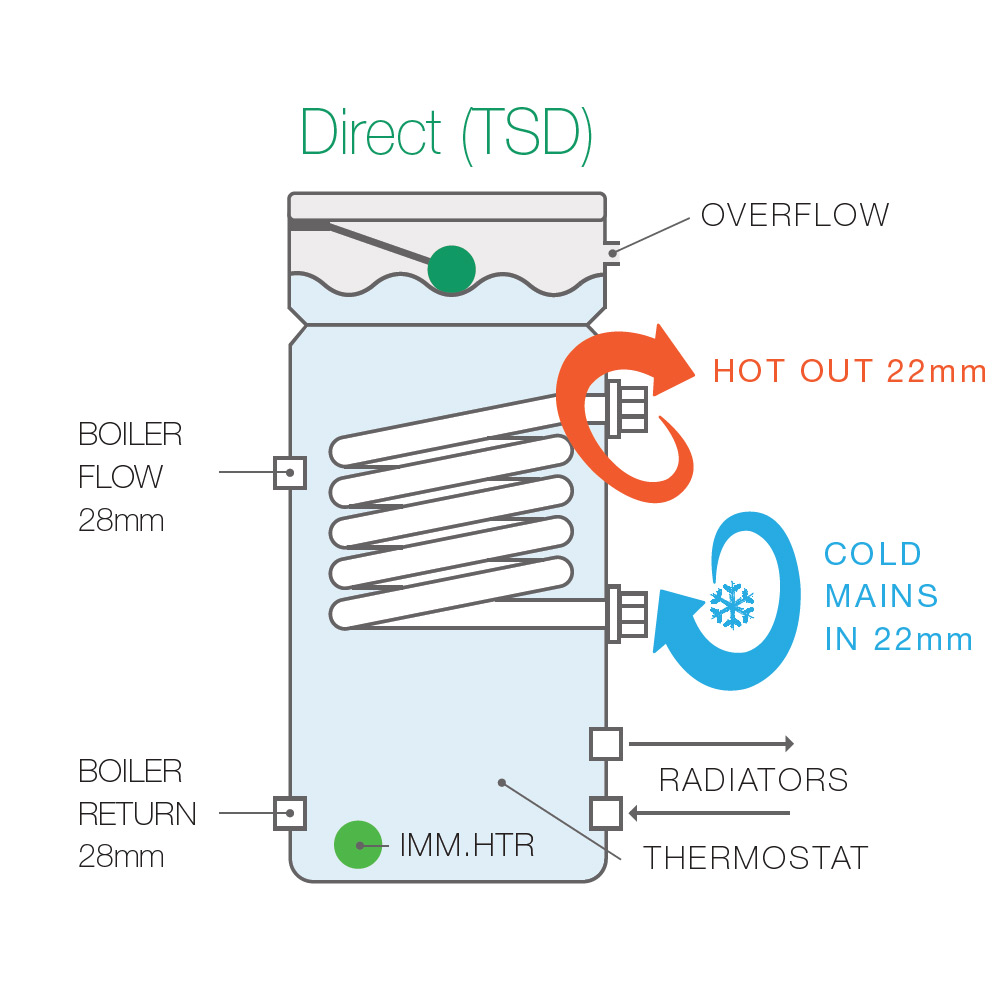
SOURCE: Unvented Components Europe
What is a thermal store?
A thermal store is an insulated tank that stores heat (not stored mains hot water). Inside the tank is a large volume of primary water that’s heated by one or more heat sources, such as:
- A gas boiler
- A heat pump
- Solar thermal
- A wood burner / stove with a back boiler
- An immersion heater (as backup)
- A communal/district heat network (common in flats and newer developments)
When you open a hot tap, the thermal store transfers heat to your domestic hot water through a heat exchanger (commonly a coil inside the tank, or a plate heat exchanger).
How does a thermal store work?
A thermal store is basically a “heat battery” for your home.
The key idea
- The store holds primary water that stays within the heating system.
- Your heat source heats the store to a target temperature.
- The store then supplies:
- Central heating (radiators/underfloor heating), and
- Hot water on demand via a heat exchanger
Why it can be a great setup
- Strong hot water performance (often good flow rates, depending on design)
- Multiple heat sources can be connected to one tank
- Can help with system stability and reduce short-cycling in some setups
- Works well in homes where you want mains-pressure hot water without storing large volumes of domestic hot water
Thermal store vs hot water cylinder: what’s the difference?
- A hot water cylinder stores domestic hot water (the water you use at taps/showers).
- A thermal store stores heat in primary water, then heats domestic hot water as you use it.
In plain English: a cylinder stores hot water; a thermal store stores heat.
What temperature should a thermal store be set to?
This depends on the store design, your hot water demand, and the heat source.
As a simple rule of thumb, many domestic thermal stores are commonly set somewhere around 70°C–80°C to deliver good hot water performance.
- Setting it too high can increase heat loss and running costs.
- Setting it too low can reduce hot water performance (especially at higher flow rates).
If you’re not sure what’s right for your system, it’s worth having the controls checked so you’re not overheating the store unnecessarily.
Best practice: how to run a thermal store efficiently
Efficiency comes down to temperature control, heat losses, and how your system is set up.
1) Don’t run it hotter than necessary
Running the store hotter than needed increases standing heat losses.
- Aim for a setpoint that still gives you comfortable hot water at the taps.
- If you’re consistently overheating the store “just in case”, you’ll usually pay for it.
2) Make sure the tank insulation is doing its job
A thermal store should be well insulated. If the cupboard feels warm or the tank loses heat quickly, you may be paying to heat your home in the wrong place.
- Check the insulation jacket (if fitted) is intact
- Check the cupboard/plant area isn’t excessively warm
- Ask your engineer to check for heat loss from pipework (see below)
3) Insulate primary pipework (especially near the store)
Uninsulated pipes around the store can waste a surprising amount of heat.
- Insulate primary flow/return near the tank
- Insulate hot water draw-off pipework where possible
- Pay attention to pipework in lofts, garages, and external walls
4) Use time schedules that match real life
If your store is heated all day “just in case”, it will lose heat all day too.
- Use heating schedules that reflect when you actually need hot water and heating
- If you’re out during the day, consider a lower daytime setpoint or shorter heat-up windows (where appropriate)
5) Keep the system clean and protected
Sludge and debris reduce heat transfer and can cause circulation issues.
- Make sure the system has the correct inhibitor
- Consider a magnetic filter (and have it serviced)
- If you’ve got cold spots/noisy radiators, ask about a system clean/powerflush
6) Balance radiators and check pump settings
If the heating side is unbalanced, the system can run longer than necessary.
- Balance radiators so heat is distributed evenly
- Check the circulating pump is set correctly for the system
7) If you have solar thermal, check it’s actually contributing
Solar thermal can be brilliant with a thermal store, but only if:
- Sensors and controls are working properly
- The coil/heat exchanger is transferring heat effectively
- The system is commissioned and set up for your household demand
Common issues we see
- Store temperature set too high “to be safe”
- Store temperature set too low to provide consistent hot water delivery
- Poor pipe insulation around the store
- Controls not set up properly (leading to unnecessary reheating)
- Sludge in the heating circuit reducing performance

Need help with a thermal store in South London?
If you’re not getting the hot water performance you expect, or you want to make sure your system is running efficiently, we can help.
We’re a local, Gas Safe registered heating company serving South London and North Surrey, and we’ll talk you through your options clearly.
Contact Trusted Boilers to book an inspection or advice visit.

Room Thermostats: Best Use & Advice for a Warm, Efficient Home
New Combi Boiler Installation: The Ultimate Homeowner Guide